How to

Good presentations matter

Last week I was involved in a CPD session at our staff festival, aimed at people interested in presenting at events and writing for publication. My colleague Julie Allinson did the publications part - she recommended Mike Ashby's guide to writing a paper (PDF). I did the presentations bit, and it was based on a mixture of a recent LibMarketing slideshow on making good PowerPoints, and advice about public speaking that I'd previously written or read. It's worth a look particularly if you haven't already seen 'Good Slides Matter', because it refers to some research behind what works and what doesn't in multimedia learning, and advises how to build presentations accordingly. There's also some SUPER-ADVANCED MEGA TIPS at the end... :)


Thanks to @girlinthe for drawing my attention to the multicolor search engine - a brilliant tool! Try experimenting with putting in the two main colours of your library brand - you can then do away with templates entirely.

- thewikiman

The Library Marketing Toolkit is OUT NOW! Here's what's in it

The book I spent 2011 writing is finally out! Facet Publishing have printed and released the Library Marketing Toolkit and the pre-orders have been sent. There are details of what the book contains, and who writes its 27 case studies, on librarymarketingtoolkit.com, but as you'll know if you've read this blog before I really like slide-presentations as a way of getting info across in a non-boring way; with that in mind, here's what you can expect from the book. Chapters, themes covered, case studies, etc.

Still too early for full reviews, but some pre-prints were sent out and have been getting some good feedback:

‘Ned Potter's  book will help any library succeed in creating a community that is aware and engaged in its library. He has written an easy to follow tool kit targeted at the specific marketing needs of librarians that is sure to become a favourite resource for anyone involved in marketing a library. There are case studies from libraries around the world that will inspire you no matter whether your library is large or small. You'll love this book!’ - NANCY DOWD, AUTHOR OF 'BITE-SIZED MARKETING'

[The Toolkit] is brilliant and  a great addition to the library professional discourse.’ – ANDY WOODWORTH

'The Library Marketing Toolkit is packed full of useful, informative and above all practical information about the best ways of getting your message across, and it should be on the shelf of every librarian and information professional who needs to promote the idea of the library and its value in a modern day society.' – PHIL BRADLEY, CILIP PRESIDENT

You can click here to buy in the US, via Amazon.com, or if you're in Canada you can click to buy via Amazon.ca or finally in the UK you can click here to order via Amazon UK - or just get it straight from the publisher.

It's finally done!

- Ned

10 top tips to build momentum in online communities

A motion-blurred spinning top  

There are more and more communities online - working with people is great, and now it is easy, too. Anyone can create a network, or a movement, or a collaboration. But what works well and what doesn't?

I was originally going to present on how to build momentum in online communities at Online last year, but I ended up not having time to attend and this has been sitting in my drafts folder ever since. I'm going to put this out there and see if there's any more tips people would like to add.

As a bit of background, I've been involved with a few projects that involve online communities in one form or another:  the Library Routes ProjectBuy India a Library, and most relevantly LISNPN, the New Professionals Network. Crucially I've also been involved in at least one project which hasn't worked out, so I've had positive and negative experiences from which to put together these tips.

3 to 6 are basically about people, 7 to 9 are about promotion, and the others are general logistics stuff.

1. The first month is crucial, so work like a madman/woman

The word 'month' is flexible here, but basically the time around the launch is so, so important to building momentum which can be self-sustaining thereafter. It's worth delaying the launch of a new network / community / project until you know you (and your team - see below) have time to dedicate to making it work.

2. Stagger new developments

As much as its tempting to launch your new project in its final, ninja-level awesome state, if you can bring in new developments and ideas over the course of the first few months, this really helps keep up momentum. New things re-engage people, and make them more likely to share links to your project via their existing networks.

3. Assemble a team

Working with other people is BRILLIANT. They'll think of things you haven't thought of, spot potential you hadn't considered, and save you from embarassing or costly mistakes you hadn't forseen. (Or is that just me?) A team of people also means more natural advocates for the project, and more support for the community itself.

4. Empower the members

Trying to control any kind of online space is SO 2005. You're better off giving power and responsibility to the whole membership, rather than trying to micromanage everything. Once your project launches, accept it is going to have a life of its own and try and encourage that. Empowered members are engaged members - they're more likely to feel the kind of ownership which gets them more involved.

5. Have a horizontal hierachy

Very closely related to number 4- as much as it is important to have people acting as administrators in an online space, it's better if people aren't waiting on you (or whoever is nominally in charge) to make things happen. So allow people to edit the online space, to set up their meet-ups, to contribute resources, etc etc.

6. Utilise champions

Word of Mouth Marketing - it can't be beat! If the right people talk to the right networks, that's a far more effective way of spreading the word than doing it all yourself. Find people who love the project, and give them all the information and tools they need to spread the word more widely.

7. Disseminate online - everywhere!

This obvious but there's a really important underlying point here, which it took me AGES to learn - promotion works best if people find out about something in more than one way, and more than once. It's very rare that a single event will have a massive effect - so, a single ad in the perfect journal, or a single blog-post guesting on the perfect blog; you'd think they'd cause a massive amount of people to check out your online community, but they won't. It's actually people seeing the same thing in a variety of sources they trust and value that makes people actually DO SOMETHING - i.e. click a link and have a look at a post or a website. This is why strategic marketing works so much better than one-off-promotion - what Terry Kendrick would call a 'series of touches at the right times' result in positive things happening.

To take a really simplified example - if someone tweets a link to a blog post with a title which doesn't inspire you, you'll probably ignore it; but if 4 or 5 other people you respect RT it, you'll probably think it's worth checking out anyway, and have a look.

8. Use mailing lists

I'm not a fan of mailing lists and don't subscribe to any, but a lot of people do and whenever stuff like LISNPN got promoted on JISCmail lis-serves, there was always a huge increase in clicks on the site and people becoming members. I think it's literally because there's no gap between finding out about something and seeing it in the flesh - you just click the link and your there. For that reason, it's good to link to an intersting page!

9. Avoid print, or at least don't rely on it

I've found the opposite of 8 to be true with 9 - articles in printed publications just don't seem to bring people in. I'm sure it helps in a small way (it continues the series of touches described in number 7) but there's a massive drop-off in direct action resulting from a print-article, probably because there's no link to click so the half-interested never think of it again, and the quite interested don't remember to go back later on when they're at a computer.

10. No one wants to be first onto the empty dance-floor so you need your ducks in a row before you launch

For LISNPN, we got 50 people as members BEFORE we launched, and made sure the forum was populated with some introductory posts etc. After that, for the first month we had an average of 636 page views a day and 10 people signing up per day - that was sufficient to create self-sustaining momentum thereafter.

People are drawn to stuff which is already happening; they don't want the responsibility of making it happen themselves...


- thewikiman

You already have a brand! Here are 5 ways to influence it... (#CILIPNPD12)

Yesterday I presented at possibly my favourite library event of all, CILIP's New Professionals Day. I love it because it gets so many people fired up and energised, and there's so much enthusiasm about the place. I was honoured to do the first talk of the day, and my presentation was about two things: firstly the fact that you don't have to be a super-librarian to get on in your career, and secondly that we all have a personal brand so if you do want to try and build that brand, there are steps you can take to do so positively.

I wanted to dispel some myths (particularly that we all have to aspire to be like the really well-known, uberlibrarians), following on from this blog post about whether or not we really have to market ourselves at all, which explains a lot of the stuff I talked about yesterday.

Here's the presentation (works best on full-screen):

The biggest and most effective change I've ever made to the way I organise my work-load...

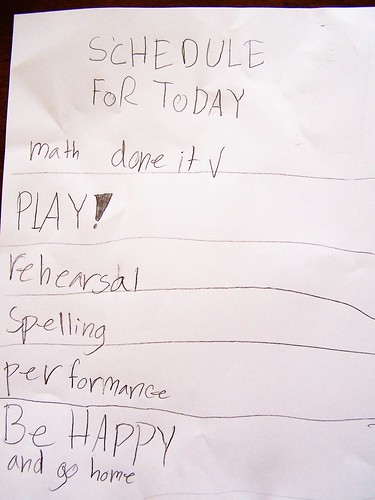
... has been to create a separate and specific To-Do list, entitled "Things Other People Are Waiting On Me To Do". It seems a really small thing but trust me on this, you have to try it! a child's to do list

I really can't emphasise enough how useful this has been. I can't even fully explain why - I think it's something to do with how it really focuses the mind. I always feel more comfortable working on stuff that is more general, or is a new idea / experiment, or that is specifically for me, when I know that other people aren't waiting on me for stuff. Also, it allows you to prioritise effectively in those moments when you know you have only 20 minutes before a meeting: yes you could check your emails, or you could work on that presentation you have to give next week - but if you look down your Things Other People Are Waiting On Me To Do list and see a nice 20-minute sized task to complete, it feels like a really productive use of your time, which frees you up to concentrate fully on your own stuff later.

I personally divide my list into People in Music and People in TFTV (the two departments I look after as an Academic Liaison Librarian), People in the Library (meaning the rest of the staff here in the Information Directorate) and Information Professional People (which is a catch-all term I use for stuff I do professionally like talks and presentations, the book etc). Obviously to some extent, everything we do at work is for other people - but having a separate to do list with, say, 'provide list of titles for X', 'order books for Y' and 'get back to Z about whatever' and those kind of specifics is a really effective way of helping organise my work-load. This doesn't replace my general to-do list, it runs alongside it.

I add things to it as soon as they come in - it's a way of making sure I stay aware of the need to email someone back about something, rather than it staying in my mind for a bit and then slipping off my radar, for example. I have my list in Evernote, but it would work in whatever format you like your to-do lists in.

Try it! Seriously, give it a go. I've converted a couple of colleagues here, and although I think they thought I was just rambling when I first told them about it, they've since told me how effective it's been for them too...

- thewikiman