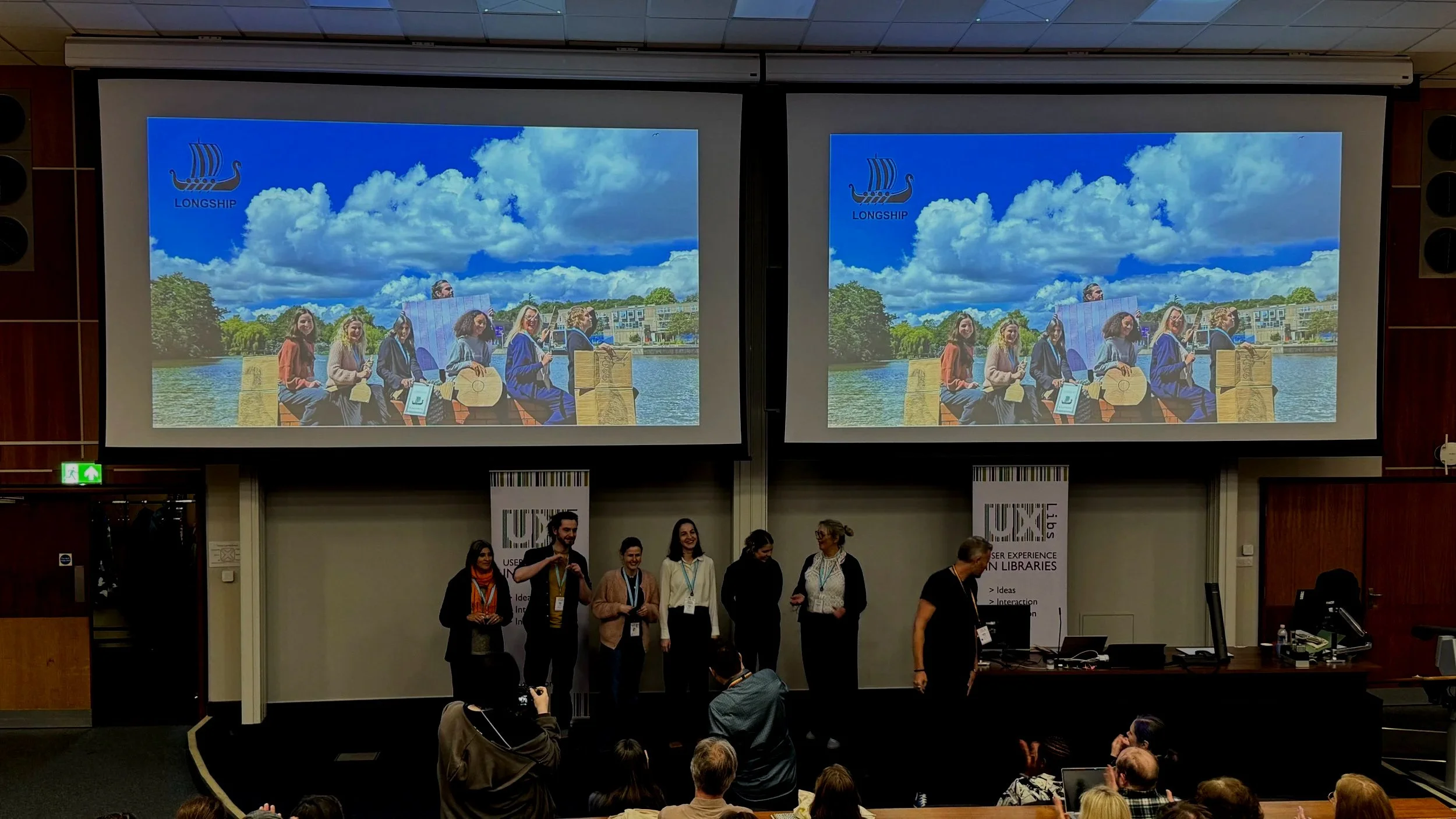
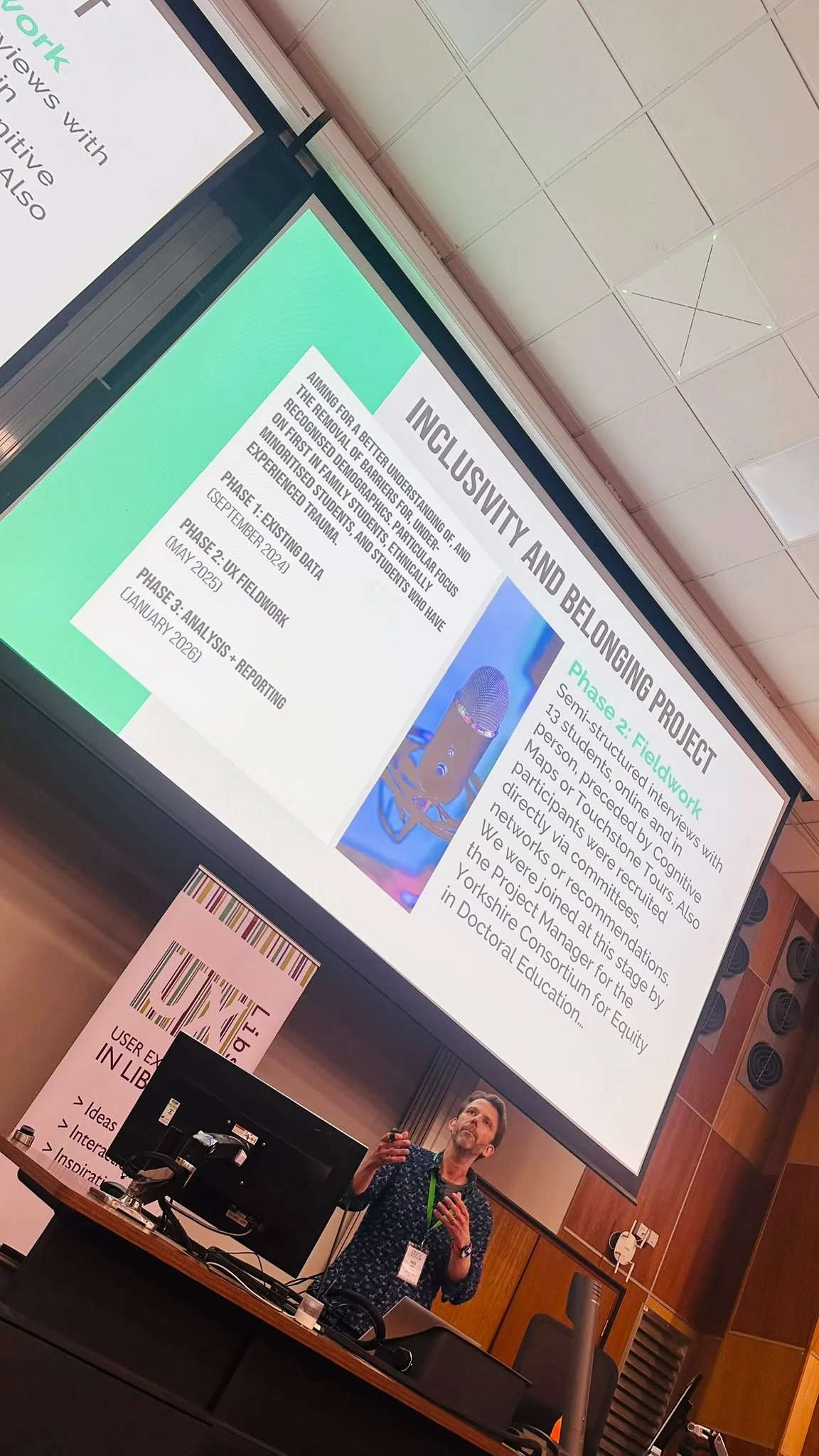
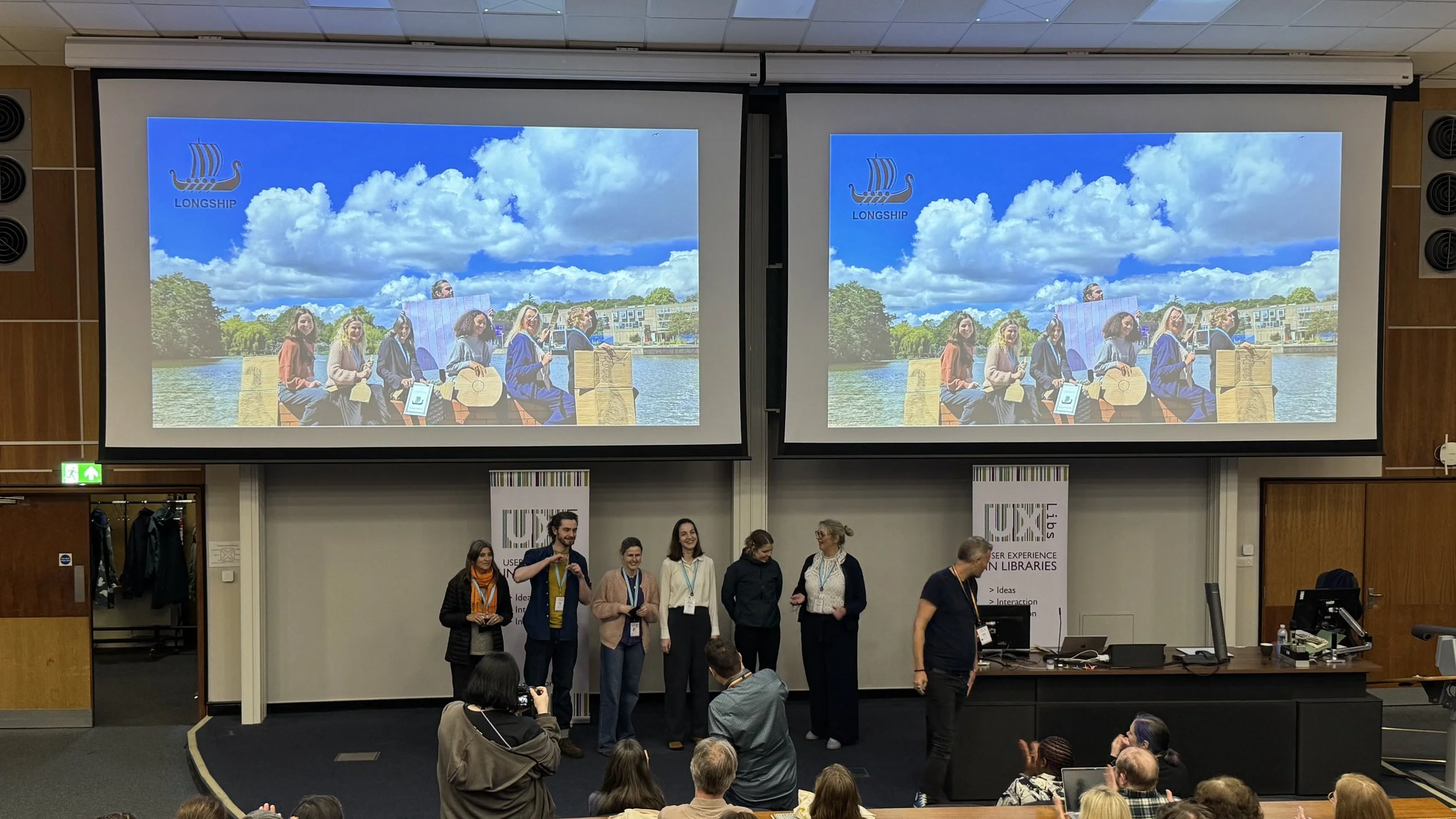
Pic by Raj Mann
Exactly a decade ago I attended my first User Experience in Libraries Conference. It changed everything for me: I’ve said before that I think UX is the most exciting thing to happen to UK librarianship in the twenty years I’ve been involved with it. I now have UX in my email signature (Faculty Engagement Manager: Community + UX) and my favourite projects at work have all been centred around UX techniques and ideas.
With all that in mind, to be asked to give one of the keynotes at the 10th UXLibs conference, in my home City of York no less, was just an incredible honour and a wonderful opportunity. I was beyond excited and well into absolutely thrilled. I even managed to sneak my always incredibly supportive parents into the hall to see the talk, along with 170 proper delegates from 18 countries…
My previous post was about the talk itself - Elevating Voices: UX as a Tool for Equity. Have a look if you’d like to see the slides and some associated links. This post is more about the conference as a whole.
Interactions: a uniquely supportive conference
My parents have never seen me present before (not in the flesh, anyway; a previous keynote from New Zealand which was live-streamed, and I asked the #LIANZA audience to wave to my Dad who got up at 3am to watch it! ) and I loved having them there. Part of the reason it wasn't off-putting was that I was completely relaxed, thanks to the incredibly welcoming, inclusive, and friendly vibe that the conference has.
Partly this is a product of the personalities of Andy, Andrew, Bryony, Julie and Marisa - they're all lovely people and this infuses the event. But it's also the product of *work*. The committee work to make the conference inclusive - an unimaginable level of thought and care goes into every aspect of it. UXLibs is what happens when the committee go beyond 'what should a conference do or have here?' and just thinks about, well, the user experience... What is the best possible thing for the delegates? Let's do that.
I massively appreciate all that hard work the committee put into that side of things. And I also like that the Code of Conduct makes explicit what is expected of us as delegates, and that the welcome at the start of the day (including the always-brilliant Housekeeping with Amy!) puts everyone at their ease. And I like that the fact we should listen to and respect each other as delegates, and allow space for different viewpoints, isn’t just tacitly assumed: it is asked for, out loud. All of this works together to create a unique atmosphere, and I can say with absolute certainty the UXLibs community is the most supportive conference community I’ve ever been a part of.
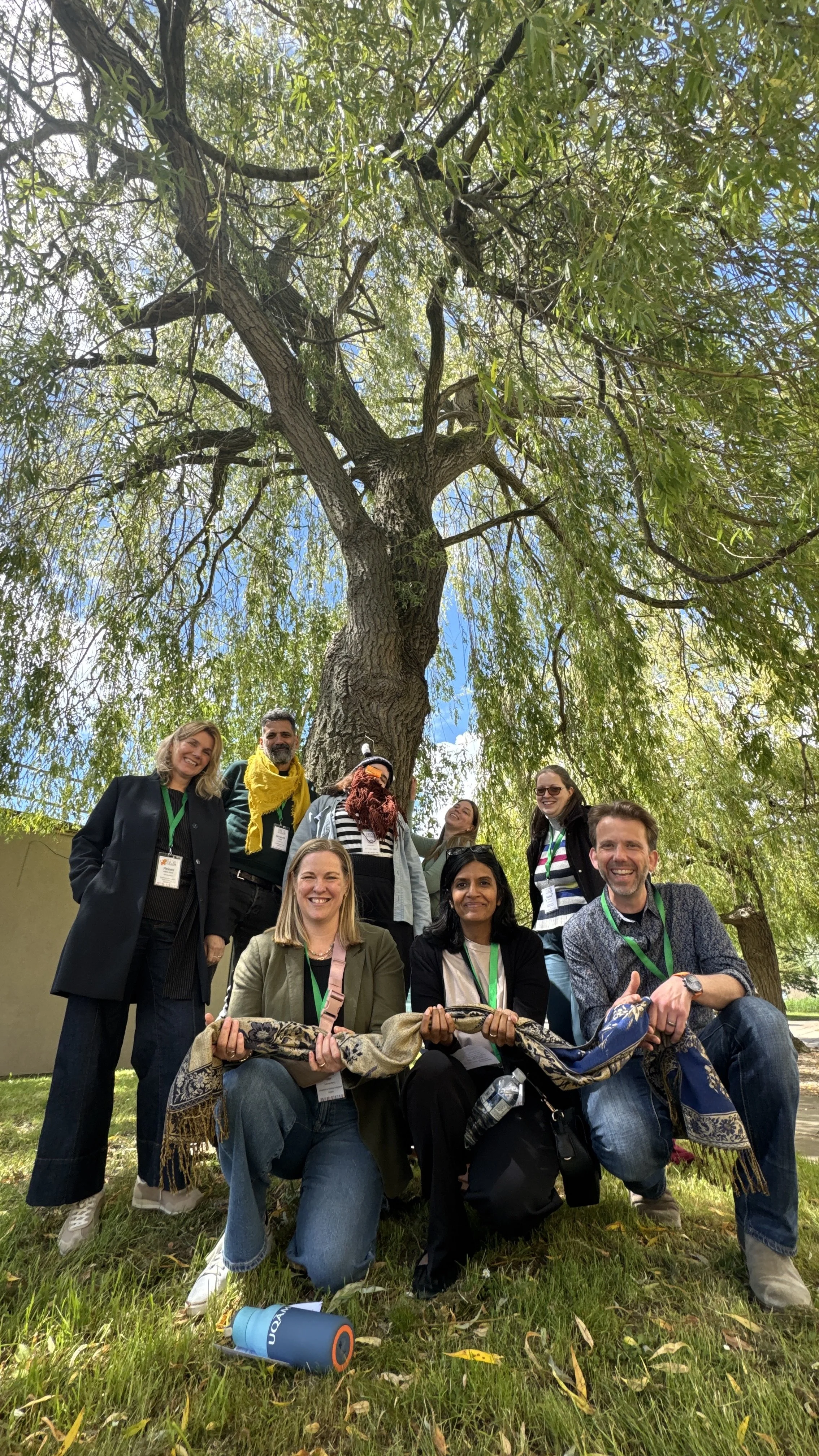
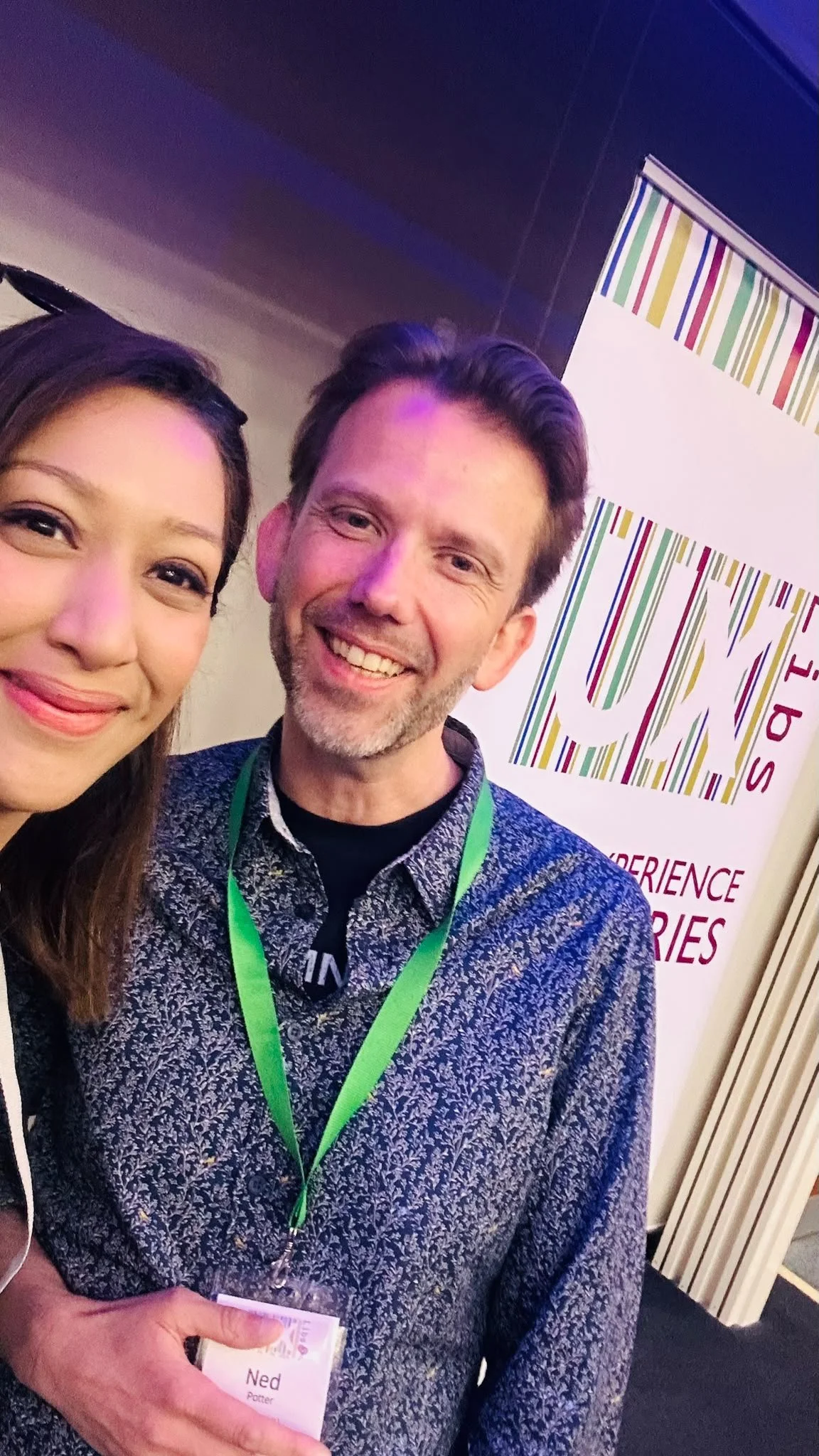
It was conference if ideas and interactions for me. I loved presenting on the same day as my friend Raj Mann who was fabulous in both her keynote, and her talk, AND the connections exercise she got us all doing... I loved seeing UXLibs regulars again after a couple of years away. I loved being able to invite my wife Alice to the Gala Dinner with me. I loved working with Team Great Tree for the Team Challenge. I loved catching up with my colleague Clare Ackerley in between sessions. I loved all the conversations I had with all the delegates about themes from my talk, or other topics. And I loved the inspiration I got from everyone there.
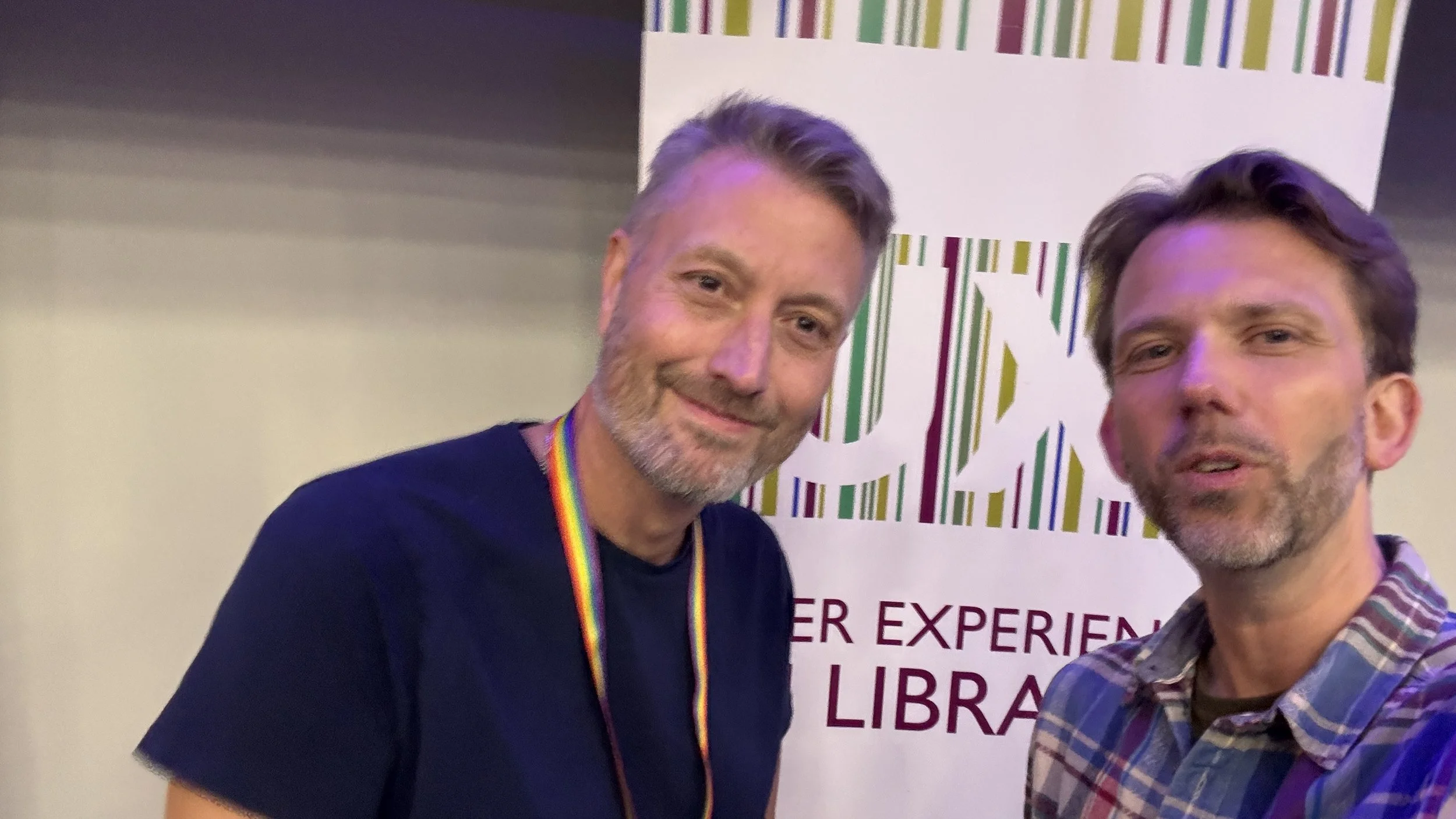
As I've said before, I have zero-chill about getting to do a keynote at my all time favourite conference. Thank you Andy for inviting me, thanks everyone who listened.
Inspiration: Five ux techniques i now want to try
I scribbled the most notes I've ever scribbled at an event, and generally had a very enriching time. Here are some techniques I'm itching to try now I'm back at my desk.
1) Photo elicitation. Using photos of library spaces or asking the user to go and take photos of library spaces that mean something to them, leading into an interview. An alternative to the Touchstone Tour or Cognitive Map into interview pairing I usually use. Thanks to Prakash Chauhan amd Catherine Broadley for their brilliant workshop on this.
2) Creative maps. I realised during the conference all the cognitive maps I've asked users to draw have been from their memory - map this process or that space or that building. But Andy Priestner and others shared examples of much more creative, speculative maps - maps about how spaces could be, or even maps about how library services make you feel...
3) Quote walls for staff. We get so many great pieces of feedback about our services via UX, and we do try and pass it on to relevant sections. But Romy Hilbrich and Thomas Reimer put feedback on posters at the State Library Berlin, and I'd love to do this in staff areas in my library.
4) New-staff-as-users. I love this idea (also from Thomas and Romy): new members of staff spend a day as users, completing tasks and feeding back. I always ask new staff to give us feedback before they become institutionalised, but I want to try a more structured, UX-leaning way of approaching this.
5) Positionality statements. Positionality is our understanding of who we are, our experiences and privileges and characteristics, and how these interact with the research we're doing. It's hard to explain this in a brief LinkedIn post so I'd recommend further research if you're unfamiliar, but examining our own perspectives and biases is key for creating safe environments for research participants, especially those who may not benefit from all the same privileges. At the brilliant Raj Mann's prompting I began talking briefly about my positionality in UX interviews with ethnically minoritised students, and explaining why I wanted to learn from them and what I wanted to do with the information they shared with me. I think I need to start doing this in all UX interviews going forward.
That's just 5 things - not to mention the app-blocking Brick thing Amy Theobald and Andrew Alexander showed me, or the brilliant Sensory Map session we had from Megan and Victoria at Uni of Lancashire which we've been planning to do at York (and now have the knowledge to get started), the the extension of our Living Room space in another building inspired by the Team Challenge... Viva UXlibs!