conference talk

Inspiration and interactions at UXLibs 10

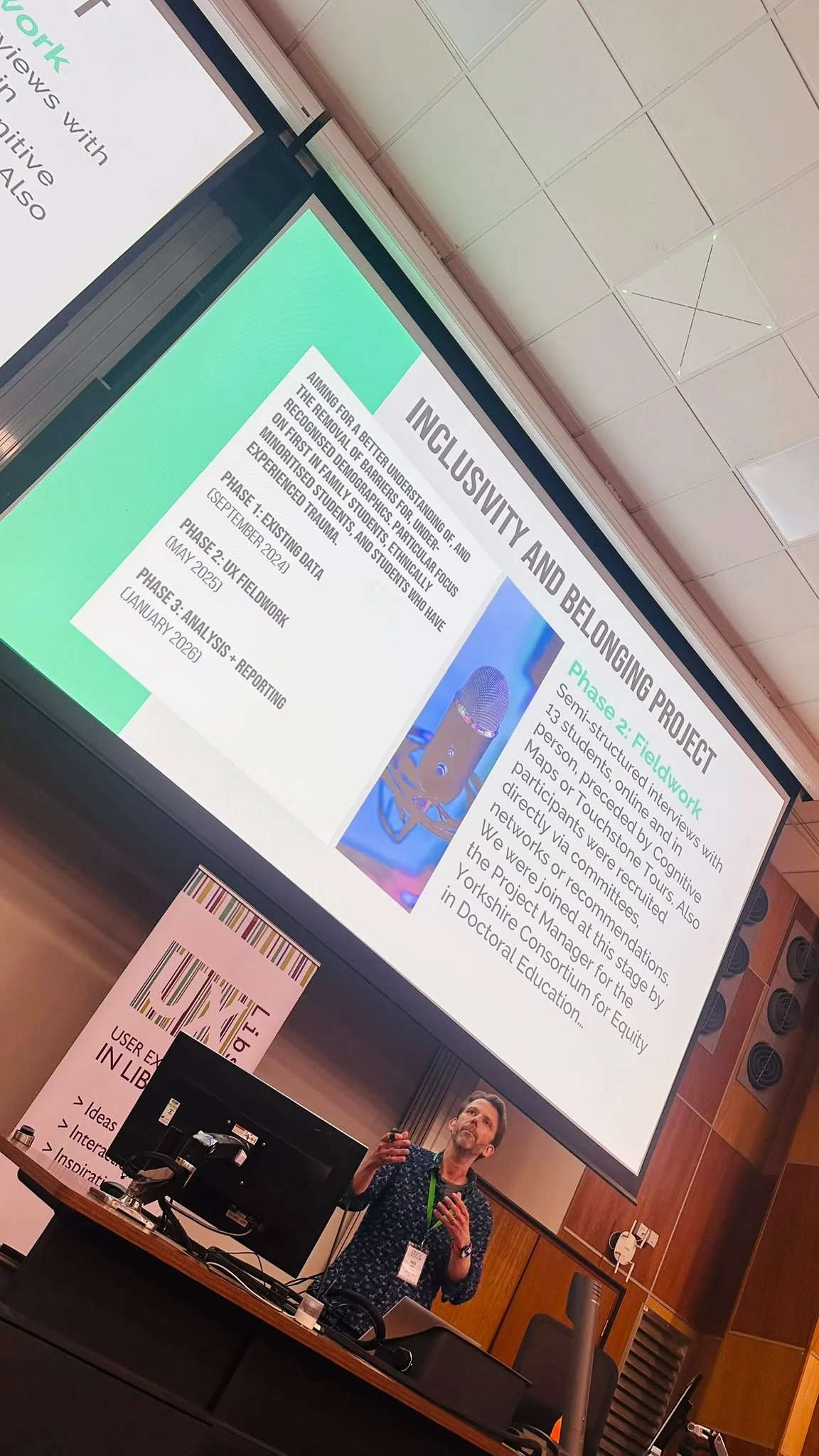
Ned Potter presenting a slide about inclusivity and belonging

Pic by Raj Mann

Exactly a decade ago I attended my first User Experience in Libraries Conference. It changed everything for me: I’ve said before that I think UX is the most exciting thing to happen to UK librarianship in the twenty years I’ve been involved with it. I now have UX in my email signature (Faculty Engagement Manager: Community + UX) and my favourite projects at work have all been centred around UX techniques and ideas.

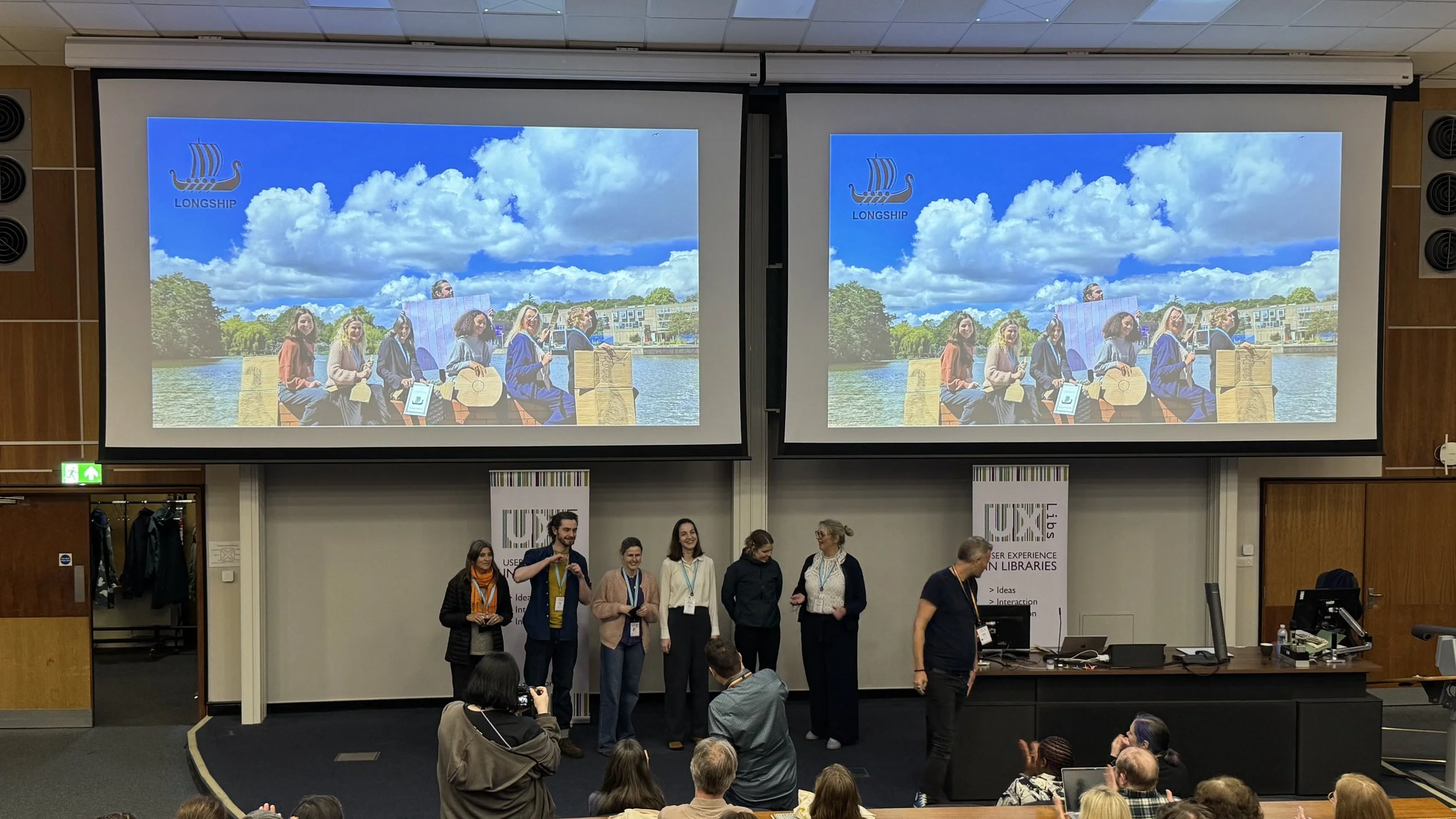
With all that in mind, to be asked to give one of the keynotes at the 10th UXLibs conference, in my home City of York no less, was just an incredible honour and a wonderful opportunity. I was beyond excited and well into absolutely thrilled. I even managed to sneak my always incredibly supportive parents into the hall to see the talk, along with 170 proper delegates from 18 countries…

My previous post was about the talk itself - Elevating Voices: UX as a Tool for Equity. Have a look if you’d like to see the slides and some associated links. This post is more about the conference as a whole.


Interactions: a uniquely supportive conference

My parents have never seen me present before (not in the flesh, anyway; a previous keynote from New Zealand which was live-streamed, and I asked the #LIANZA audience to wave to my Dad who got up at 3am to watch it! ) and I loved having them there. Part of the reason it wasn't off-putting was that I was completely relaxed, thanks to the incredibly welcoming, inclusive, and friendly vibe that the conference has.

Partly this is a product of the personalities of Andy, Andrew, Bryony, Julie and Marisa - they're all lovely people and this infuses the event. But it's also the product of *work*. The committee work to make the conference inclusive - an unimaginable level of thought and care goes into every aspect of it. UXLibs is what happens when the committee go beyond 'what should a conference do or have here?' and just thinks about, well, the user experience... What is the best possible thing for the delegates? Let's do that.

I massively appreciate all that hard work the committee put into that side of things. And I also like that the Code of Conduct makes explicit what is expected of us as delegates, and that the welcome at the start of the day (including the always-brilliant Housekeeping with Amy!) puts everyone at their ease. And I like that the fact we should listen to and respect each other as delegates, and allow space for different viewpoints, isn’t just tacitly assumed: it is asked for, out loud. All of this works together to create a unique atmosphere, and I can say with absolute certainty the UXLibs community is the most supportive conference community I’ve ever been a part of.

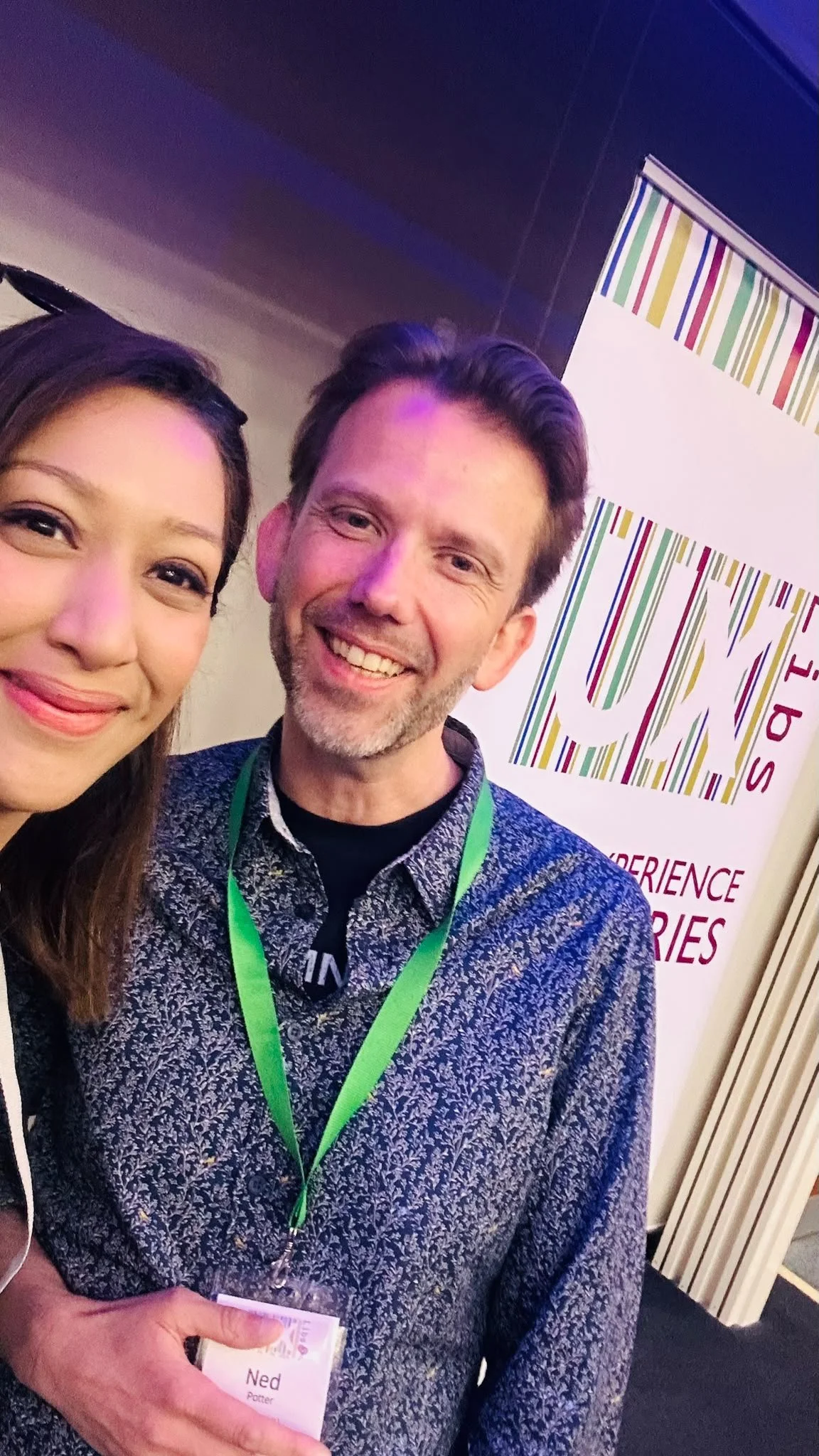
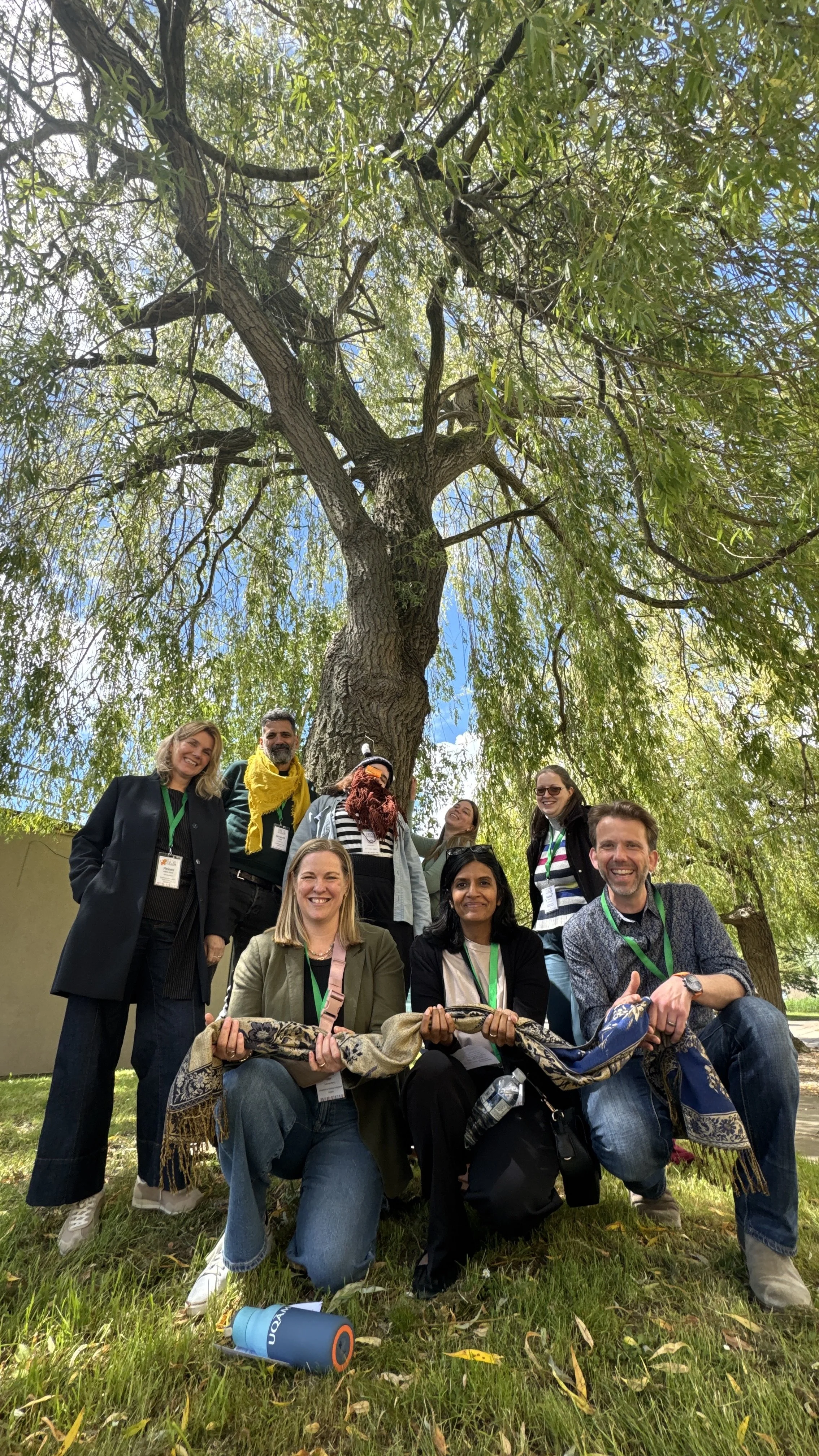
It was conference if ideas and interactions for me. I loved presenting on the same day as my friend Raj Mann who was fabulous in both her keynote, and her talk, AND the connections exercise she got us all doing... I loved seeing UXLibs regulars again after a couple of years away. I loved being able to invite my wife Alice to the Gala Dinner with me. I loved working with Team Great Tree for the Team Challenge. I loved catching up with my colleague Clare Ackerley in between sessions. I loved all the conversations I had with all the delegates about themes from my talk, or other topics. And I loved the inspiration I got from everyone there.

As I've said before, I have zero-chill about getting to do a keynote at my all time favourite conference. Thank you Andy for inviting me, thanks everyone who listened.
Inspiration: Five ux techniques i now want to try

I scribbled the most notes I've ever scribbled at an event, and generally had a very enriching time. Here are some techniques I'm itching to try now I'm back at my desk.

1) Photo elicitation. Using photos of library spaces or asking the user to go and take photos of library spaces that mean something to them, leading into an interview. An alternative to the Touchstone Tour or Cognitive Map into interview pairing I usually use. Thanks to Prakash Chauhan amd Catherine Broadley for their brilliant workshop on this.

2) Creative maps. I realised during the conference all the cognitive maps I've asked users to draw have been from their memory - map this process or that space or that building. But Andy Priestner and others shared examples of much more creative, speculative maps - maps about how spaces could be, or even maps about how library services make you feel...

3) Quote walls for staff. We get so many great pieces of feedback about our services via UX, and we do try and pass it on to relevant sections. But Romy Hilbrich and Thomas Reimer put feedback on posters at the State Library Berlin, and I'd love to do this in staff areas in my library.

4) New-staff-as-users. I love this idea (also from Thomas and Romy): new members of staff spend a day as users, completing tasks and feeding back. I always ask new staff to give us feedback before they become institutionalised, but I want to try a more structured, UX-leaning way of approaching this.

5) Positionality statements. Positionality is our understanding of who we are, our experiences and privileges and characteristics, and how these interact with the research we're doing. It's hard to explain this in a brief LinkedIn post so I'd recommend further research if you're unfamiliar, but examining our own perspectives and biases is key for creating safe environments for research participants, especially those who may not benefit from all the same privileges. At the brilliant Raj Mann's prompting I began talking briefly about my positionality in UX interviews with ethnically minoritised students, and explaining why I wanted to learn from them and what I wanted to do with the information they shared with me. I think I need to start doing this in all UX interviews going forward.

That's just 5 things - not to mention the app-blocking Brick thing Amy Theobald and Andrew Alexander showed me, or the brilliant Sensory Map session we had from Megan and Victoria at Uni of Lancashire which we've been planning to do at York (and now have the knowledge to get started), the the extension of our Living Room space in another building inspired by the Team Challenge... Viva UXlibs!

New video: library social media in a post-twitter world

Earlier this year I spoke about the social media landscape for public libraries in particular, at the Edge Conference in Edinburgh. It was a great room full of interesting and passionate people, and one of those slightly intimidating setups where you’ve got no laptop in front of you, just a TED-talk style presenter screen facing you from the floor below the stage…

The talk was filmed by prettybright.co.uk (more on which below) and they kindly gave me the footage, to which I’ve added a real-time screen-record of me doing my slides.

There are two reasons I want to share this here. Firstly it gives a pretty up to date state of play on library social media (and although it is public library focused a lot of it applies to other sectors too) and encapsulates a lot of key tips and approaches I feel really passionately about. I really enjoyed the take-aways from my talk (and others) in Dr Mary-Ellen Lynn's review of the event here.

Secondly it will give people an idea of what you get if you book me for a talk, and this particular presentation is a sort of microcosm of the social media workshops I run, minus the activities. When I speak at a conference I’m actively trying to flatten the hierarchy between speaker and audience - I want it to be as much a conversation as possible. I want to focus on ideas that can lead to actions. I want people to feel included, and reassured, as well as inspired to do things differently afterwards. Anyway: if you want to me to talk at your event or run some training, get in touch!

Shownotes:

1) Prettybright really helped me out here. They’d already uploaded a version of the talk to Vimeo but it had minor formatting issues with the slides and I wanted to be able to chop the talk up into shorter chunks (e.g. for sharing a section on LinkedIn) so I asked for the original footage, without realising how much work this would entail at their end. They had to shrink down and colour-grade the original broadcast quality footage from a giant 113 gig file and I’m really grateful to Howard Elwyn-Jones and his colleague Louisa for going above and beyond to do this for me.

2) In the section about Insta I mention ‘the Paisley presentation’ as being filled with the kinds of images that would work really well on that platform: that was in reference to Stephen Slevin’s talk which you can see here

3) At the end I mention handing over to my also Yorkshire-based colleagues: those were Jen Boyle and Rachel Ingle-Teare whose brilliant talk you can view here, about Leeds Libraries

4) The other talks from Edge are all on prettybright’s Vimeo too

5) I delivered a talk in Dublin about social media from the academic library point of view - this was also filmed (albeit just via Teams for the hybrid event, rather than on high quality gear): view Rebuilding the library community here

6) While I was at Edge I also judged a library innovation competition, which I found completely inspiring - I wrote about the winning and highly-commended entries here

Social Media Manifesto video

Following on from my talk at #VALA2022 in Melbourne, the organisers have kindly made the video available. Apart from the fact that the kitchen / slides synergy is even more pronounced than I’d feared it was, I’m happy that I don’t seem too asleep for the hour (12:15am, UK time…)!

My hope with this talk was that it would be cross-platform (the ideas in the manifesto will hopefully apply whether you’re a Twitter user, Instagram user, Facebook user etc) and also cross-sector, for public, academic, health, business, special and school libraries all being able to potentially apply these principles.

Thanks for watching!

A library social media manifesto

Last night at quarter-past-midnight, I sat in my kitchen and was live-streamed into a #VALA2022 conference room in Melbourne. The hybrid thing worked really well, more on which below, but first things first, here are my slides.

The presentation

A library social media manifesto

When I was invited to present on the topic of social media I wasn’t initially sure how to frame it. I talk about social media in workshops all the time but that’s a different thing, really - 3 hours instead of 30 minutes, hands-on rather than a talk, and normally quite focused so for example just covering one tool or approach. In the end I submitted an abstract I was not quite happy with, and then about a month later was struck by the ‘manifesto’ framing for the info and asked the organisers if I could change my plans! They kindly said yes, updated the website etc, and so the slides above are the product of all that.

I’ve tried to create something universal, so whether you work in public, academic, health, school, law or business libraries this should apply equally. I’ve also tried to create something that will help libraries feel refreshed and re-energised - some people I’ve spoken to have talked about a bit of a lull in their social media progress, after making some real progress a year or so into the pandemic… Anyway, check out the slides and see if the ideas help you. The video of the talk will be available in due course.

I absolutely love, love, love this sketch-note of my talk from Kim Williams. It captures all the key points and works as a companion piece to the slides above. Thank you Kim!

The hybrid experience

I realised on the afternoon of the presentation that my slide theme of slate grey and yellow matched my kitchen… What hadn’t twigged at that point was that I’d be presenting in that same kitchen! (The main ‘home office’ space is in our bedroom, in which my wife was asleep due to it being 12:15am, so the kitchen was really the only opion for this.) The people of #VALA2022 must think I’m REALLY serious about slide design and always match it to the room…

A slate grey and yellow kitchen

He’s not wrong…

ANYWAY the hybrid experience worked really well for me, and gave me hope for the future of conferences. I just attended UXLibs in person and, of all the conferences I’ve ever attended, I think that is the least doable online - we absolutely HAVE to be in the space together to make it work. So it’s a stark choice of, either have it in person or don’t have it at all. But for most conferences, hybrid can work well and VALA2022 is a great example of that.

I was on Zoom, and both my webcam and my slides appeared on the big screen in the room in Melbourne. I could also see and hear the room audience through Zoom, which makes a huge difference to how connected I felt - when I said I was drinking gin while presenting for the first time, and heard people laugh, I settled in right away.

The other key thing to all this was the conference app. People could ask questions the whole time on the app, whether they were watching online or in the room. I had these up on my second screen and responded to them in real time, which I really enjoy. Interactivity all the way through is always my preference over ‘questions at the end’.

Anyway, I had a great time, people said nice things on twitter so I’m assuming it worked well from their end too (much as I would have LOVED to be there - libraries of Australia, please invite me back over to your wonderful country! Running marketing workshops a few years back in Sydney, Brisbane and Melbourne was on of the best things I’ve ever done professionally). If you’re thinking of running a hybrid conference, talk to the VALA2022 people, they know what they’re doing!

(And if you’re wondering why hybrid is necessary, read Fobazi Ettarh’s post on the subject, and have a look at the Twitter conversation it sparked.)

Thanks to VALA for inviting me, thanks especially to Sam Gibbard, thanks to the organisers for letting me change my talk details and also for recording the session, and thanks SO much to the audience who came along - making your way early to the earliest session of Day 3 no less, and knowing it was a streamed presentation: I appreciate you!

Book Takeaway and User-Focused Delivery

Having not presented at a conference for two and a half years, I recently presented at two in a week!

In June I wrote about the Rough Edges and Risks talk I did on library social media for a UK event; a couple of days later I presented on my place of work’s user-centred response to the pandemic, for a US event: NEFLIN’s conference. Because of my incredibly unreliable blogging schedule, it’s taken me two additional months to write about this one…

First off here are the slides.

For this presention I was specifically asked to talk about University of York Library and the things we’ve done since March 2020. The slides above detail our Book Takeaway service, social media response, study space bookings and many other things in a timeline.

I’m incredibly proud of York and our response - the trouble with writing or talking about it is it just sounds like platitudes. ‘Incredibly user focussed’ is such a buzz-wordy phrase but that’s what we were and are. I enjoyed the chance to talk about the way in which we managed to deliver some amazing services during the height of the pandemic, whilst still prioritising staff well-being - it CAN be done.

You can see the presentations from all previous conferences on the Past Talks & Workshops page.