UXLibs

Inspiration and interactions at UXLibs 10

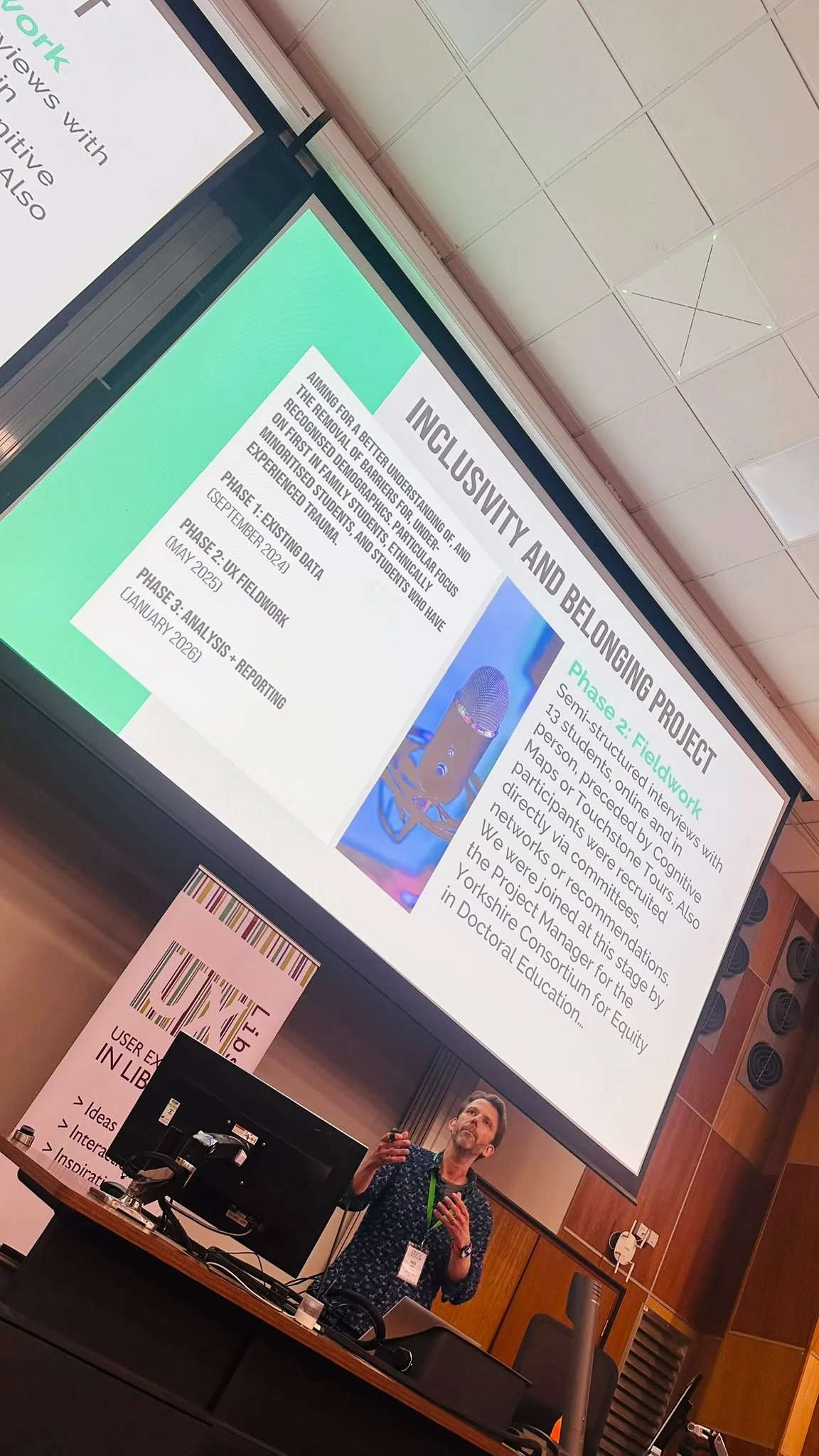
Ned Potter presenting a slide about inclusivity and belonging

Pic by Raj Mann

Exactly a decade ago I attended my first User Experience in Libraries Conference. It changed everything for me: I’ve said before that I think UX is the most exciting thing to happen to UK librarianship in the twenty years I’ve been involved with it. I now have UX in my email signature (Faculty Engagement Manager: Community + UX) and my favourite projects at work have all been centred around UX techniques and ideas.

With all that in mind, to be asked to give one of the keynotes at the 10th UXLibs conference, in my home City of York no less, was just an incredible honour and a wonderful opportunity. I was beyond excited and well into absolutely thrilled. I even managed to sneak my always incredibly supportive parents into the hall to see the talk, along with 170 proper delegates from 18 countries…

My previous post was about the talk itself - Elevating Voices: UX as a Tool for Equity. Have a look if you’d like to see the slides and some associated links. This post is more about the conference as a whole.


Interactions: a uniquely supportive conference

My parents have never seen me present before (not in the flesh, anyway; a previous keynote from New Zealand which was live-streamed, and I asked the #LIANZA audience to wave to my Dad who got up at 3am to watch it! ) and I loved having them there. Part of the reason it wasn't off-putting was that I was completely relaxed, thanks to the incredibly welcoming, inclusive, and friendly vibe that the conference has.

Partly this is a product of the personalities of Andy, Andrew, Bryony, Julie and Marisa - they're all lovely people and this infuses the event. But it's also the product of *work*. The committee work to make the conference inclusive - an unimaginable level of thought and care goes into every aspect of it. UXLibs is what happens when the committee go beyond 'what should a conference do or have here?' and just thinks about, well, the user experience... What is the best possible thing for the delegates? Let's do that.

I massively appreciate all that hard work the committee put into that side of things. And I also like that the Code of Conduct makes explicit what is expected of us as delegates, and that the welcome at the start of the day (including the always-brilliant Housekeeping with Amy!) puts everyone at their ease. And I like that the fact we should listen to and respect each other as delegates, and allow space for different viewpoints, isn’t just tacitly assumed: it is asked for, out loud. All of this works together to create a unique atmosphere, and I can say with absolute certainty the UXLibs community is the most supportive conference community I’ve ever been a part of.

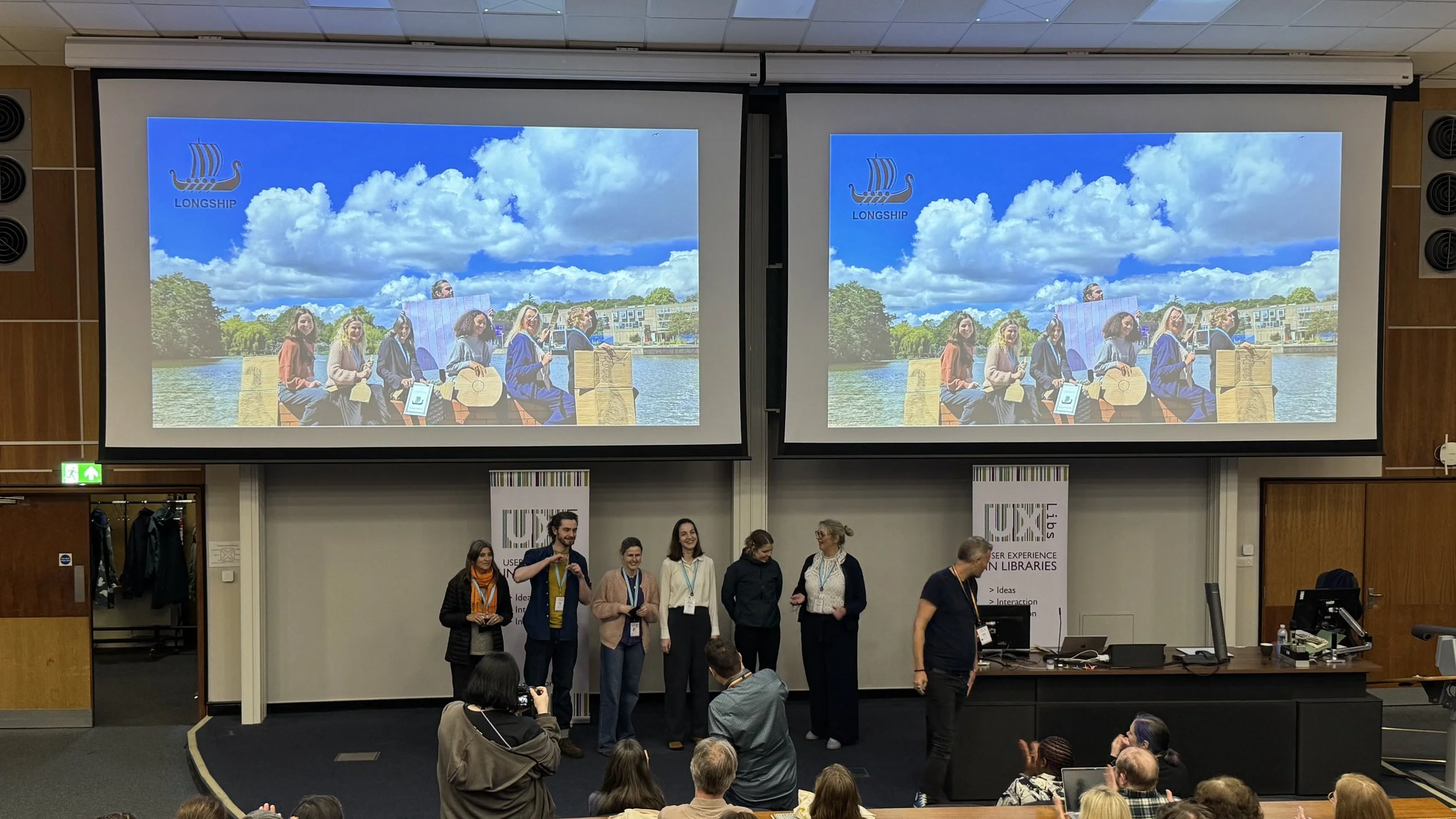
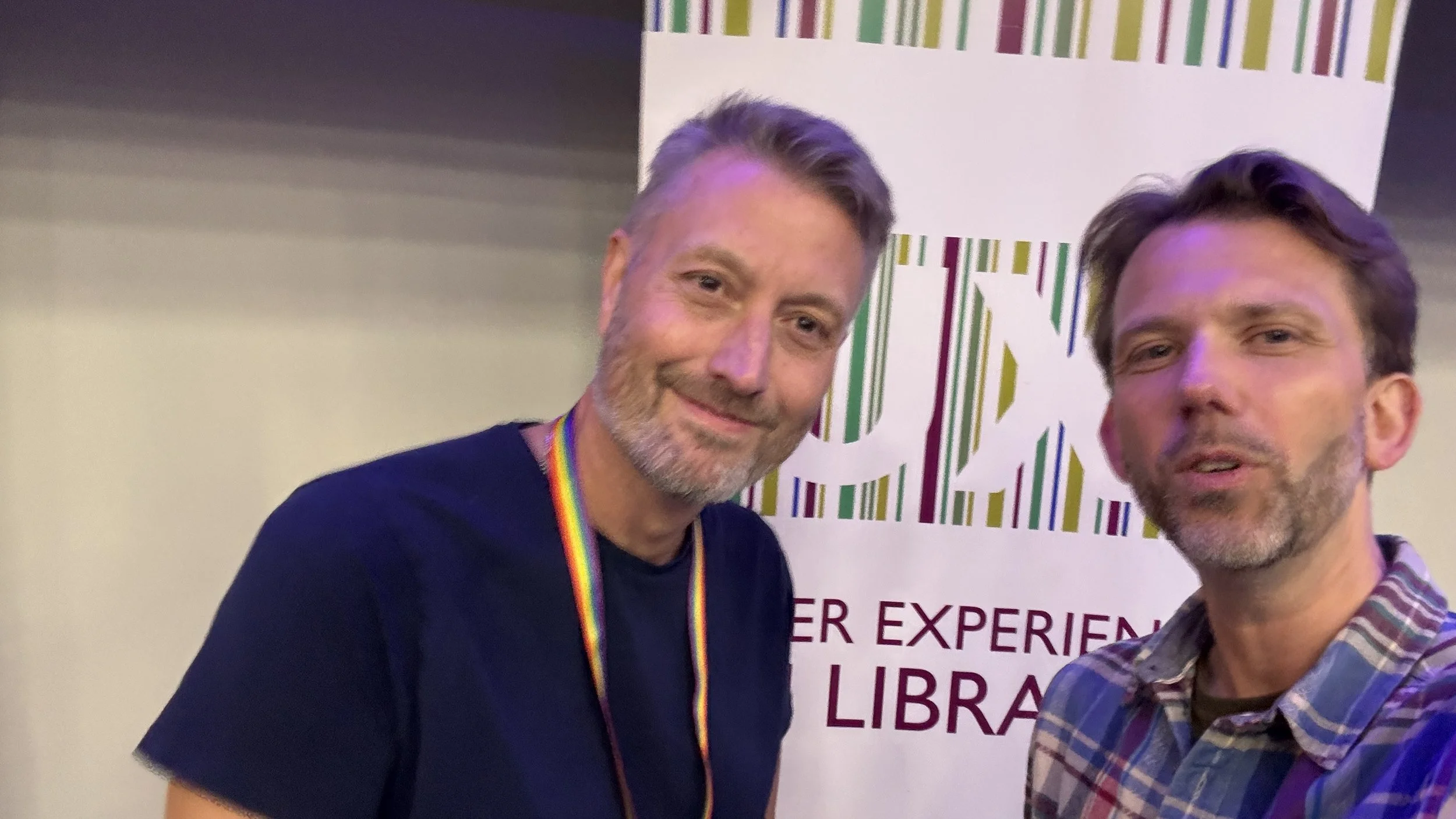
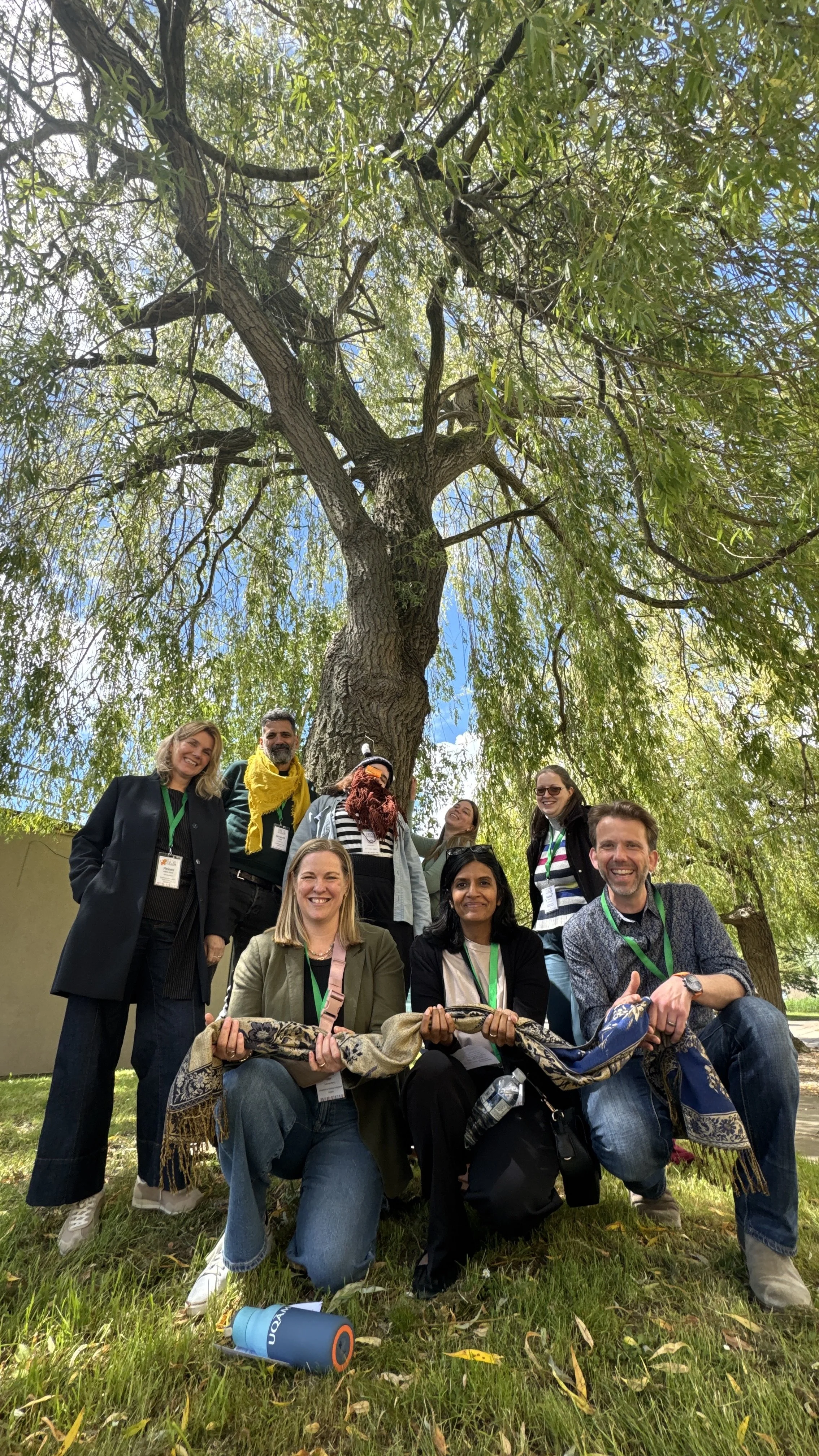
It was conference if ideas and interactions for me. I loved presenting on the same day as my friend Raj Mann who was fabulous in both her keynote, and her talk, AND the connections exercise she got us all doing... I loved seeing UXLibs regulars again after a couple of years away. I loved being able to invite my wife Alice to the Gala Dinner with me. I loved working with Team Great Tree for the Team Challenge. I loved catching up with my colleague Clare Ackerley in between sessions. I loved all the conversations I had with all the delegates about themes from my talk, or other topics. And I loved the inspiration I got from everyone there.

As I've said before, I have zero-chill about getting to do a keynote at my all time favourite conference. Thank you Andy for inviting me, thanks everyone who listened.
Inspiration: Five ux techniques i now want to try

I scribbled the most notes I've ever scribbled at an event, and generally had a very enriching time. Here are some techniques I'm itching to try now I'm back at my desk.

1) Photo elicitation. Using photos of library spaces or asking the user to go and take photos of library spaces that mean something to them, leading into an interview. An alternative to the Touchstone Tour or Cognitive Map into interview pairing I usually use. Thanks to Prakash Chauhan amd Catherine Broadley for their brilliant workshop on this.

2) Creative maps. I realised during the conference all the cognitive maps I've asked users to draw have been from their memory - map this process or that space or that building. But Andy Priestner and others shared examples of much more creative, speculative maps - maps about how spaces could be, or even maps about how library services make you feel...

3) Quote walls for staff. We get so many great pieces of feedback about our services via UX, and we do try and pass it on to relevant sections. But Romy Hilbrich and Thomas Reimer put feedback on posters at the State Library Berlin, and I'd love to do this in staff areas in my library.

4) New-staff-as-users. I love this idea (also from Thomas and Romy): new members of staff spend a day as users, completing tasks and feeding back. I always ask new staff to give us feedback before they become institutionalised, but I want to try a more structured, UX-leaning way of approaching this.

5) Positionality statements. Positionality is our understanding of who we are, our experiences and privileges and characteristics, and how these interact with the research we're doing. It's hard to explain this in a brief LinkedIn post so I'd recommend further research if you're unfamiliar, but examining our own perspectives and biases is key for creating safe environments for research participants, especially those who may not benefit from all the same privileges. At the brilliant Raj Mann's prompting I began talking briefly about my positionality in UX interviews with ethnically minoritised students, and explaining why I wanted to learn from them and what I wanted to do with the information they shared with me. I think I need to start doing this in all UX interviews going forward.

That's just 5 things - not to mention the app-blocking Brick thing Amy Theobald and Andrew Alexander showed me, or the brilliant Sensory Map session we had from Megan and Victoria at Uni of Lancashire which we've been planning to do at York (and now have the knowledge to get started), the the extension of our Living Room space in another building inspired by the Team Challenge... Viva UXlibs!
UXLibs 10

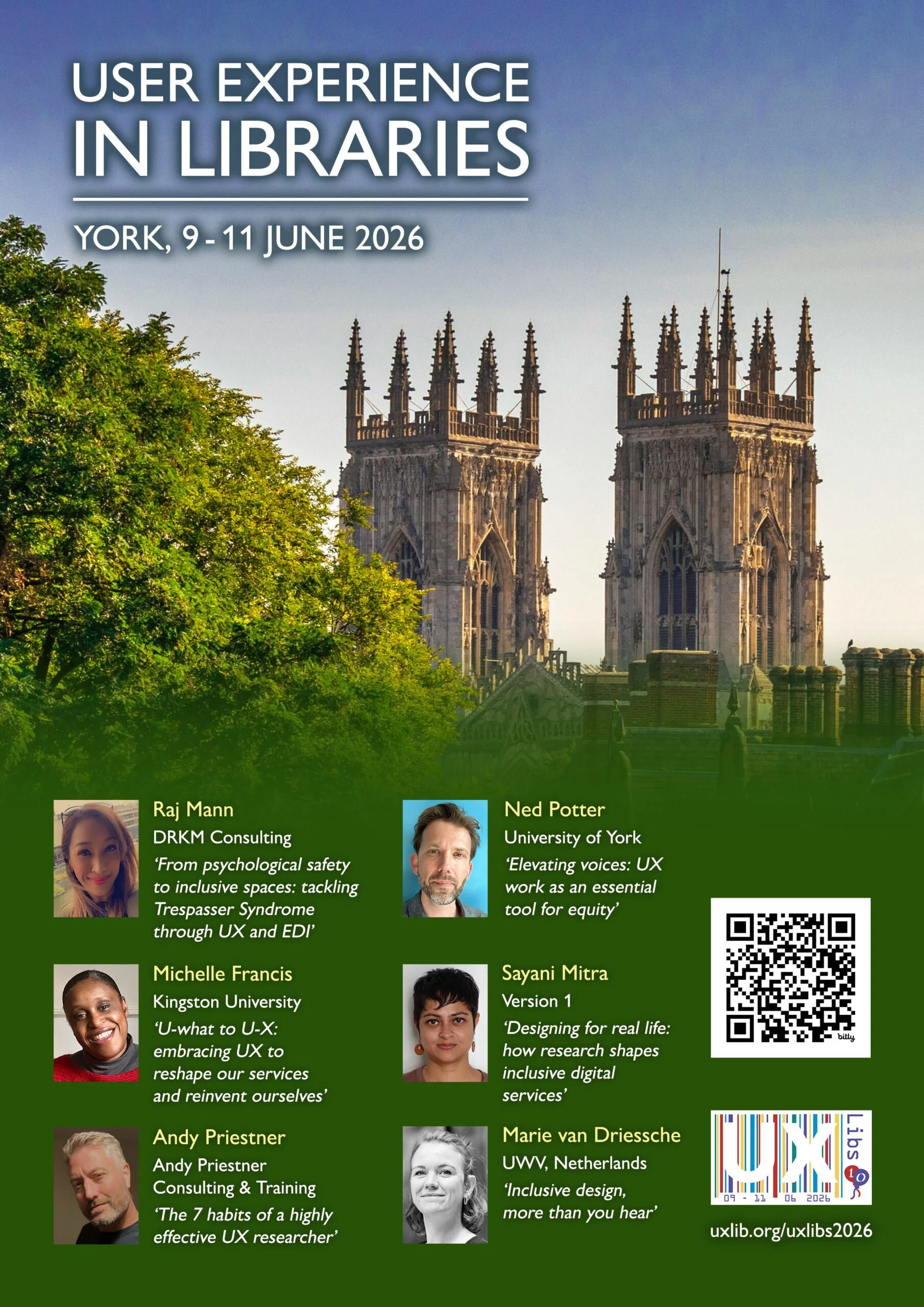
You are about to read a blog-post devoid of nonchalance or professional cool… Because this summer I am delivering a keynote speech at my favourite conference of all time, User Experience in Libraries, on its 10th anniversary, in my home City of York.

I am completely thrilled about this!

UX as a tool for equity

My talk is entitled Elevating Voices. Here’s the summary:

Higher Education is facing financial crisis. When budgets tighten, services often shrink to fit the needs of the majority, and ‘maintaining core services’ can easily become a proxy for exclusion. By designing for the ‘typical’ user – those with the fewest barriers and the most flexibility – we inadvertently sideline marginalised groups with complex needs.

This keynote positions UX work as an essential tool for equity. We will explore how libraries can represent the underrepresented, elevate diverse perspectives and ensure our institutions remain inclusive, authentic spaces for everyone.

I feel really passionately about this subject, and I can’t wait to explore it and share some of the work we’ve done at York.

About the conference

The list of speakers is fantastic, and I’m delighted Raj Mann will also be delivering a keynote: I’ve been working with her on our Inclusivity + Belonging UX Project she has been inspirational. I’ve mentioned Raj on this blog before, with regards to Trespasser Syndrome, which she’ll be talking about in her own keynote.

I have bored onto anyone who will listen about how much I love UXLibs. I attended the first one ten years ago in Cambridge, and it was revolutionary for me - learning about User Experience techniques beyond the app / web usability realm I’d previously understood was game-changing, and the conference format was incredibly innovative. A decade on and I have UX in my job title (Faculty Engagement Manager: Community + UX) and it’s a key part of my role.

I have also previously been on the organising committee of the conference for two years, so I know first hand how inclusive and forward-thinking the event is. The community that attends is usually drawn from 25 or more countries, and there’s no group of people who are more interested in the sharing of ideas. To want to do UX work you need empathy above all else, and 100 empathetic people in a room makes for a fantastic event..

If you have even have an inkling that UXLibs might be for you, I cannot recommend coming highly enough. You will learn so much you can USE, and have so much fun, and meet so many great people.

You can find full details of the conference, including booking, on the UXLibs website.

About York

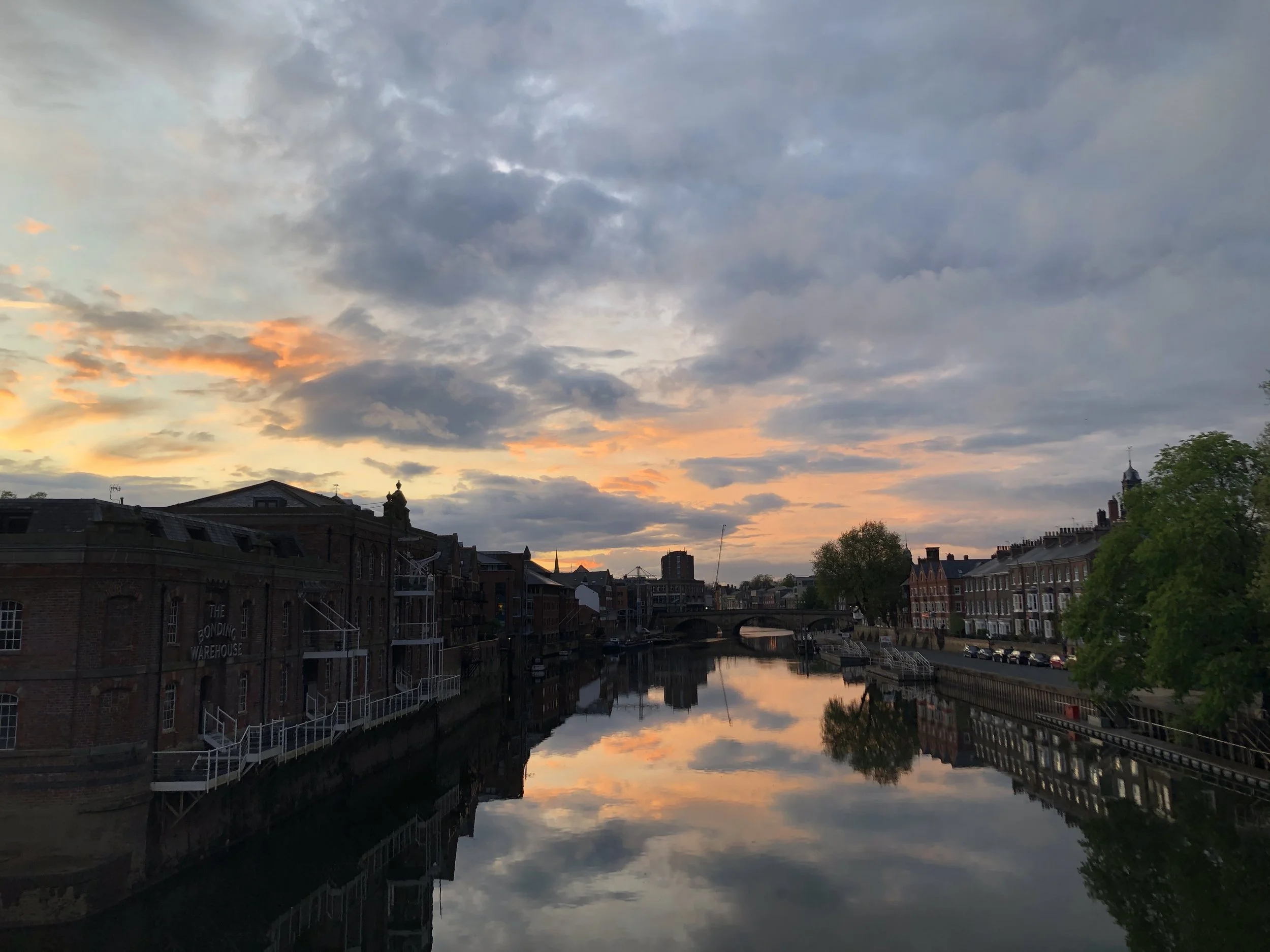
The River Ouse at sunset

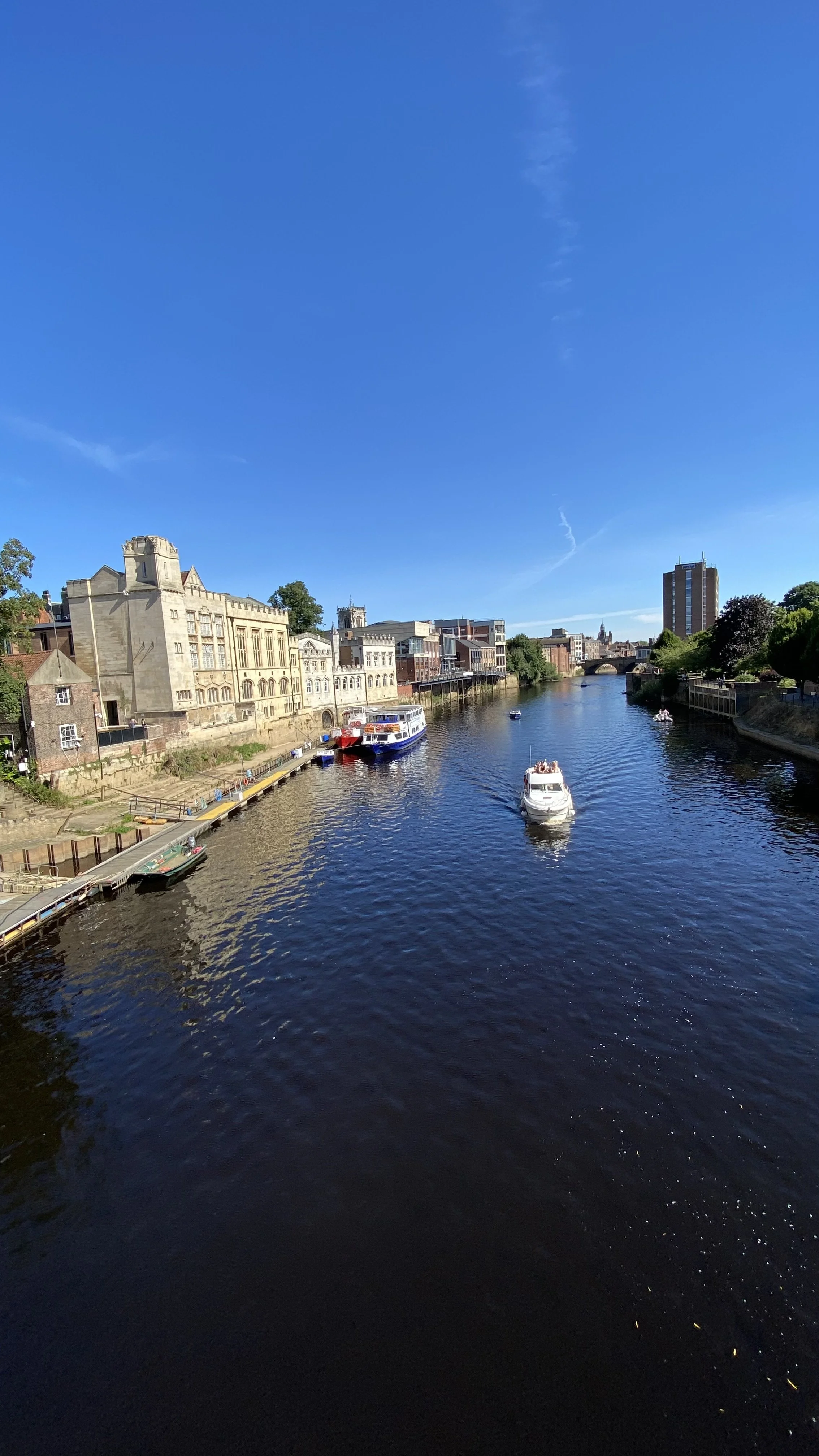
The River Ouse is pretty but very floody - hopefully in June though you should still be able to walk along the path shown here.

The River and the Guildhall in York

In the top right of this pic you’ll see the hotel at which the conference dinner takes place. Lovely hotel, but the exterior is unloved by the locals. The good thing about the Gala dinner being there is it’s one of the few places in York you can’t see the building from, because you’re inside it.

Former factories converted into flats above a canal-like river

The Ouse gets all the headlines but York’s other river, the Foss, is pretty great

York is tiny as Cities go - you probably won’t need to use a bus or a taxi while you’re here as pretty much everything is walkable. It’s very beautiful. has a famously large number of pubs, and some great places to eat. For anyone who wants recommendations:

  • If you want variety and you like shipping containers, Spark York has both of these in abundance. Loads of different foods in what is, by York’s standards, a very cool and happening place.

  • If you want six million inventive varieties of beer in and industrial-chic setting with some banging Korean street food, Brew York is the place to go. It’s very near Spark York so why not go directly from one to the other?

  • If you like cake, drop what you’re doing and head to Brew and Brownie immediately. Their pancake breakfast is famous but the trouble with it is you don’t want to eat any cake afterwards, and you need to eat their cakes.

  • For fabulous sandwiches head to Mannions

  • If you like cafes head to Bishy Road where there’s a lot to choose from - the Pig & Pastry and Robinsons in particular are a delight

If you’d like any more specific local tips just send me an email. It goes without saying I hope to see you there!

Communicating the benefits of UX to everyone who needs to hear it

At the 2023 User Experience in Libraries conference I ran a workshop all about comms and UX - basically my two favourite aspects of librarianship, mashed together, at my favourite event in librarianship. It was also in Brighton were my wife and I got married, and she came down to hang out with old friends while I was there and attended the conference dinner, and the weather was great - the whole thing was A+++, would do again.

Anyway, the workshop went really well and I later wrote it up for the 2024 UXLibs yearbook, which I’d highly recommend getting your library to buy a copy of. My chapter is now available Open Access via York’s repository so please do go and have a read if this is an area that interests you. I’ve put the intro below so you can see what it’s about.

(You can also find OA chapters from previous UXLibs Yearbooks on my Publications Page.)


The introduction TO my UXLibs YEARBOOK chapter

At the end of what was known at the University of York as the ‘UX Study Space Project’, we presented our final recommendations to management. Ten months of work had gone into it and we were proposing (or in some cases had already implemented) far-reaching and wide-spread changes: new study space booking rules; new zoning for food and noise; new signage throughout the library; increasing the number of accessible spaces; creating a new ‘Zoom Room’; purchasing some interactive mapping software… We got some really useful input from the leadership team and they signed off on all the things we wanted to do – at which point it occurred to me: this was the single most impactful piece of work I’d ever done in librarianship.

Nothing else really came close – the fingerprints of our UX project were all over the actual, day-to-day user experience of our students and staff, simplifying and improving things in so many ways: it felt euphoric! But the 10 months of hard work that had made these changes possible could have been undone if we hadn’t been able to effectively and meaningfully show the value of our proposals to the audience who could give them the green light.

UX is such a complex and messy business, and it can be easy to get lost in the processes of ethnography and design. We mustn’t undervalue the comms; successful communication plays a huge part in helping our work achieve its goals, and it’s worth breaking down the communications life cycle of a UX project to ensure we’re making the most of each stage.

Part 1 is The Pitch. This is where you communicate the value of your proposed project, to get the time and resources you require to do the work. The audience here is the managers who can release funds for incentives and release staff time for fieldwork and design, and your colleagues whose input you’d like on the project. 

 Part 2 is The Recruitment. Now the audience are library users (and, ideally, non-users too) that you need to persuade to participate in the fieldwork, lending you their insight. 

 Part 3 is The Findings. This is where you need to communicate the results in such a way that you’re empowered to really act on them – it’s not UX if all you do is diagnose problems… The audience here is not just the managers who need to approve your design proposals, but wider library staff too. Keep them in the loop and get them on board. 

 Part 4 is The Legacy. Here the audience is everyone. Everyone needs to know what you’ve done, how brilliant it was, and what the ongoing impact is. Tell the participants. Then tell the world. 

All in all, UX is a comms-heavy business, so let’s explore each stage in more detail and look at some tips to enrich your UX and help make those user-centred changes your library needs. 

[Read on here]